Conservation success stories boost farmers’ confidence
Collaboration means less trial and error for Calumet County group
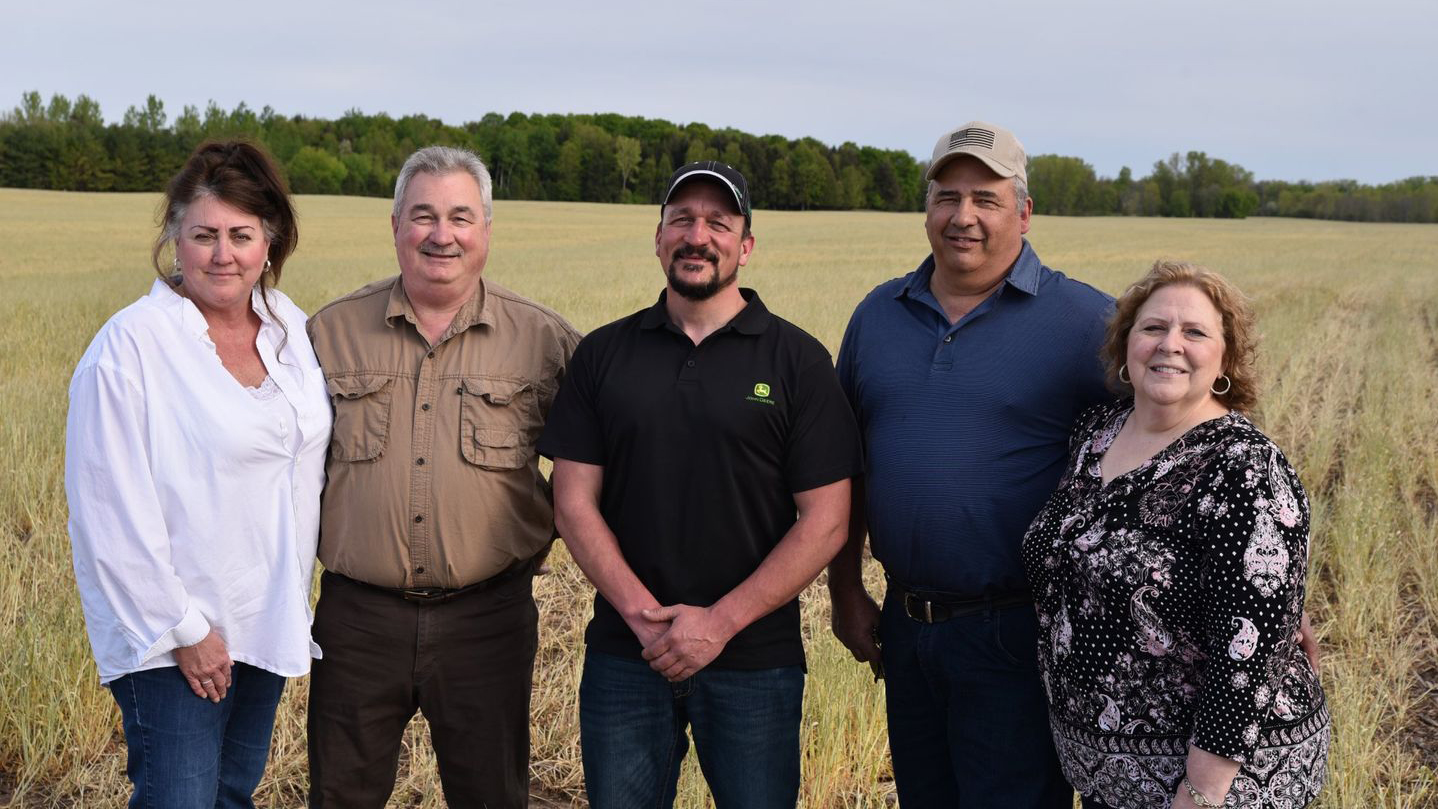
The journey toward implementing conservation practices can intimidate farmers, especially those with no prior experience. However, networking with other farmers and sharing experiences has given Mitchell Schaefer the confidence to try them on his own farm.
Schaefer farms in Calumet County on 400 acres and has 270 cows. He has 60 acres of rotational grazing with 250 heifers on site. The land he farms is silty loam and rocky soil, which is a big reason he is finding ways to protect his soil health and water quality.
Schaefer started noticing more covered fields on neighboring farms in the winter and read articles about the benefits. When his friend Kurt Schneider asked him to join Calumet County Ag Stewardship Alliance (CCASA), a farmer-led conservation group, it was a no-brainer for Schaefer.
“Having a group to talk to about practices first is extremely helpful,” Schaefer said. “The less trial and error on my own means I can have more success and faster adoption.”
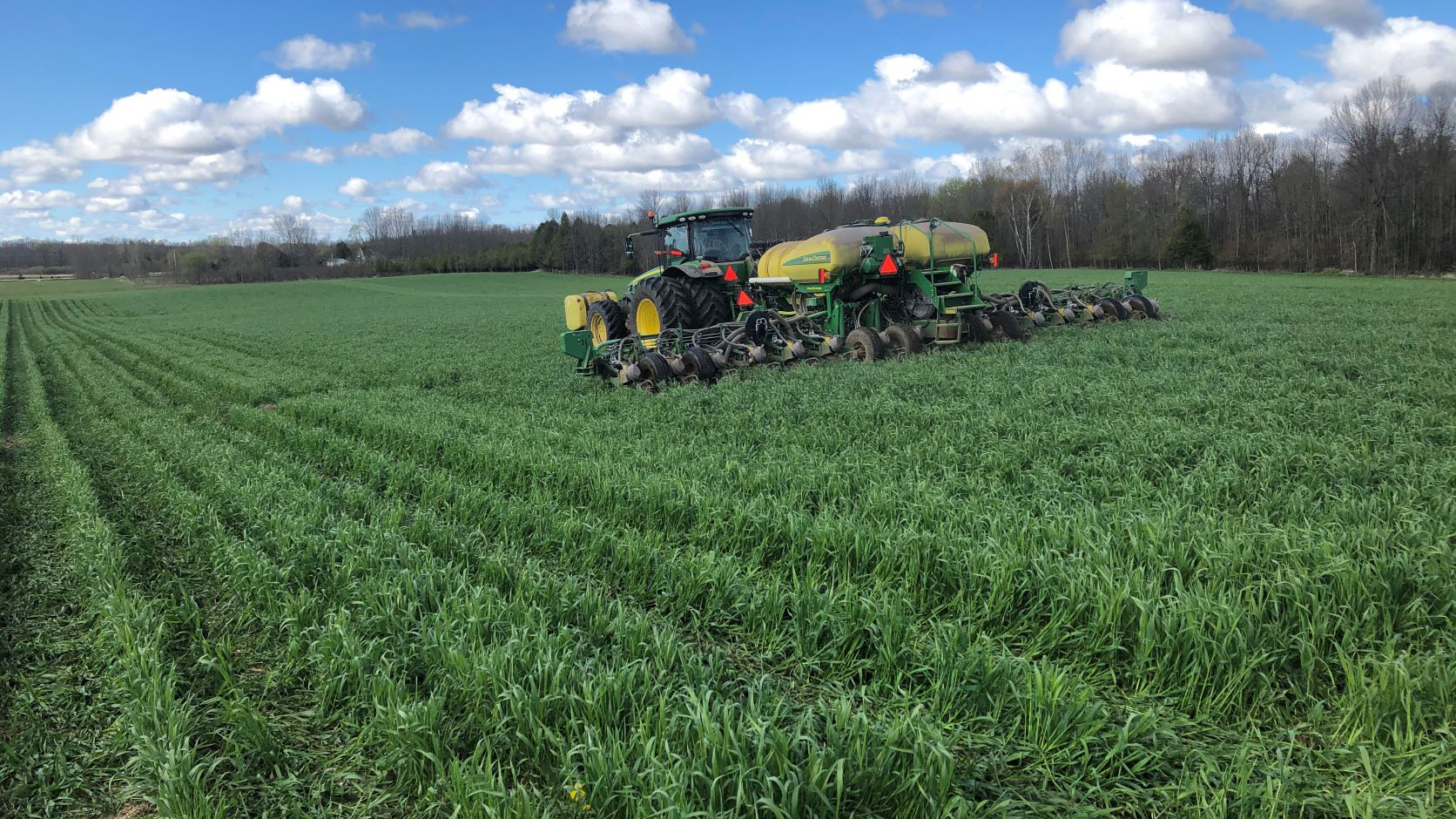
Three years ago, Schaefer began exploring minimal tillage, no tillage and the use of cover crops. He started out small with just a few smaller fields to make sure the practices would work on his land, and now has a goal to have 100% of his acres in cover crops.
CCASA continues to grow membership, now with 10 farmer-members. The three-year-old group represents 15,600 acres and 12,491 livestock, including beef, dairy and hogs. The alliance collaborates with university researchers, environmental groups and community leaders.
In 2021, members planted 6,030 acres using reduced tillage, planted 5,736 acres in cover crops, used low-disturbance manure injection on 5,438 acres and used no-tillage planting on 4,666 acres.
The practices adopted by CCASA farmers are significantly reducing the chance of harmful runoff into streams and lakes, according to a modeling-based analysis. The farmers in 2021 potentially prevented an estimated 3,506 pounds of phosphorus from leaving the fields and reduced 1,559 tons of sediment erosion along with reducing carbon dioxide equivalents by 1,572 tons, according to an analysis shared by the Wisconsin Department of Agriculture, Trade and Consumer Protection; the University of Wisconsin-Madison; and The Nature Conservancy (TNC).
For comparison, a mid-size dump truck can carry 10 tons of sediment, and 1 pound of phosphorus in a lake or stream has the potential to cause the growth of up to 500 pounds of algae, which can degrade water quality. The amount of greenhouse gas emissions reduced equals 339 miles driven by a gas-powered passenger vehicle.
The modeling-based analysis calculated an estimate of the potential impact of cover crops, low-disturbance manure application and reduced tillage compared to more conventional methods typical to the group’s area.
Schaefer uses primarily winter wheat, rye and alfalfa on his operation through the off-season.
His biggest challenge is implementing manure into the cover crop cycle and finding a way to uniformly apply manure throughout the year. Also, left-over crop residue from no-tillage was a concern.
“While no-till planting this spring, I noticed great root mass clumps and quite a bit of trash from the growth in the field’s last crop,” Schaefer said. “I had to figure out whether to work up the land. I knew from the group and articles I’ve read to just plant into it, letting the residue do its job to help the soil.”
TNC, a key supporter of CCASA, helped complete the analysis, which is based on surveys from the farms.
“The farmers in the Calumet farmer-led group are working to accelerate the widespread use of sustainable agriculture practices like cover crops and no-till planting,” Steve Richter, TNC’s director of agriculture strategies in Wisconsin, said. “These farmers are not only growing robust crops, but they are also demonstrating farm practices that can improve water quality and withstand the impacts of a changing climate.”
Schaefer is happy to see more people willing to share and teach others about these practices and the benefits they provide. He understands that his farm needs to be sustainable to stay in business and produce a safe and healthy product that customers want to purchase.
“It’s a good move on your farm ― there really is no down-side. It’s going to benefit the environment and keep us in business,” Schaefer said.
BY THE NUMBERS
Number of acres covered by conservation practices among Calumet County Ag Stewardship Alliance members:
- 2020 ― 26,295
- 2021 ― 62,276
*Multiple conservation practices can be used on a farm field
Potential impact of conservation practices in 2021:
- Phosphorus runoff reduction ― 3,506 pounds
- Sediment erosion reduction ― 1,559 tons

 “It is rewarding to see this comprehensive approach to farm-level conservation making a positive difference,” said dairy farmer Jean Stauffacher, co-owner of Highway Dairy Farms, a participant in the project. “We are rolling up our sleeves and doing the hard work. There is still more to be done; we don’t have it all figured out. But we realize this is a long-term commitment. Tailoring our practices and measuring results is becoming the standard way of doing business.”
 “A key to success in our project is the diverse partners who help make it happen,” said Lauren Brey, managing director of Farmers for Sustainable Food (FSF). “From the farmers doing the work, to the team documenting what is happening in the fields and analyzing the data, to organizations providing guidance and funding, each group brings value to the collaboration. It’s proof that we are more successful when we work together toward common goals.”
 “Grande takes great pride in the growth and development of its producer-direct milk supply. Developing a common vision that supports the growth of both partners, while supporting our customers, is critical,” said Greg Siegenthaler, vice president milk marketing and supply chain management for the company.
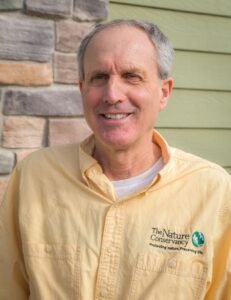 “This project illustrates the value of many different partners coming together, all adding a different perspective and playing a different role to make this a success,” Richter said. “As a group, we’ve brought together incentives for conservation practices, a national model for farmers to track conservation efforts, and an economic study showing the value of soil health practices, and the results we’re seeing show that both the farmer and the environment are benefiting.”