News
Calumet County Ag Stewardship Alliance elects new board members at annual meeting
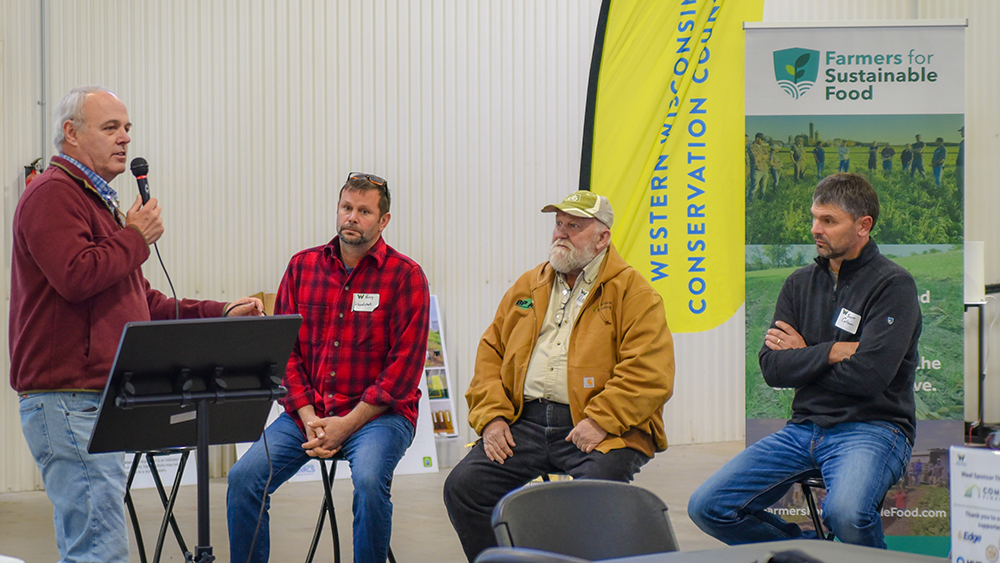
Calumet County Ag Stewardship Alliance (CCASA), a farmer-led conservation group, held its annual meeting on Jan. 24. Nearly 40 farmers, industry leaders and community members gathered to learn about the group’s continued effort to grow conservation practices throughout the county.
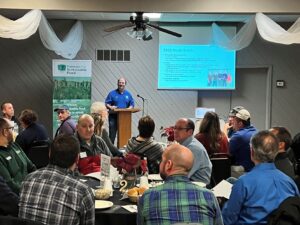 CCASA president John Schwarz shared the group’s accomplishments from 2022. The group has grown to 23 members, hosting three events last year — including a farm tour with Governor Evers. It offered another year of cost-share programs supported by DATCP and The Nature Conservancy. The group’s goals for 2023 consist of continuing cost-share programs, well-testing, increasing membership and its member conservation practice survey.
Members take a conservation survey each year to measure the group’s growth. Shawn Wesener, data collection specialist from Farmers for Sustainable Food, shared the group’s expansion to 18 farm members representing 23,801 livestock and 23,664 acres — a 67% increase in cropped acres since 2020. The survey also showed that CCASA actively manages nitrogen; 94% of members have a Nutrient Management Plan. All members have a portion of acres in cover crops and do some reduced-till or no-till with their cover crops. The group’s progress in such a short time continues to drive excitement.
Attendees also heard from guest speakers about utilizing cover crops in feed rations and how they can learn from and participate in state and federal programs.
Dan Brick of Brickstead Dairy is a participating farmer in the Lower Fox Demonstration Farms Network. He spoke about his goals of using cover crops to feed his livestock and having a high-value forage from cover crops that feed milking cows and dry cows. He feels it’s an ongoing cycle at his farm.
“Feeding the cows takes feeding the soil,” Brick said.
The focus is on quality rather than quantity. Brick shared it takes some management to time out harvest right. For example, he wants to harvest the rye or triticale to keep the plant quality before it heads out. Brick stressed working with your custom harvester. In his trials, he also found benefits in using the county-owned roller-crimper to terminate the standing cover crop and interseeder to plant cover between rows of planted corn.
Aaron Wunderlin from Discovery Farms also shared their outreach program on on-farm water quality and experiments happening in the region. They currently have two types of monitoring in several projects around the state, nitrogen leaching and edge of field. He showed the methods of the program and how they design studies with controls. This spring, a member of CCASA will be installing a research area on a local farm. He shared his gratitude for the farmer’s participation.
“We really appreciate the farmers cooperating with us to help understand the water quality across these regions,” Wunderlin said.
Joe Smedberg also briefly updated the group on USDA – NRCS programs for 2023 and beyond. He highlighted a significant amount of money coming to conservation and wanted to express the importance of getting those funds to the farmers doing the work.
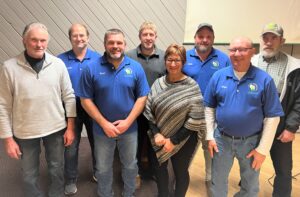
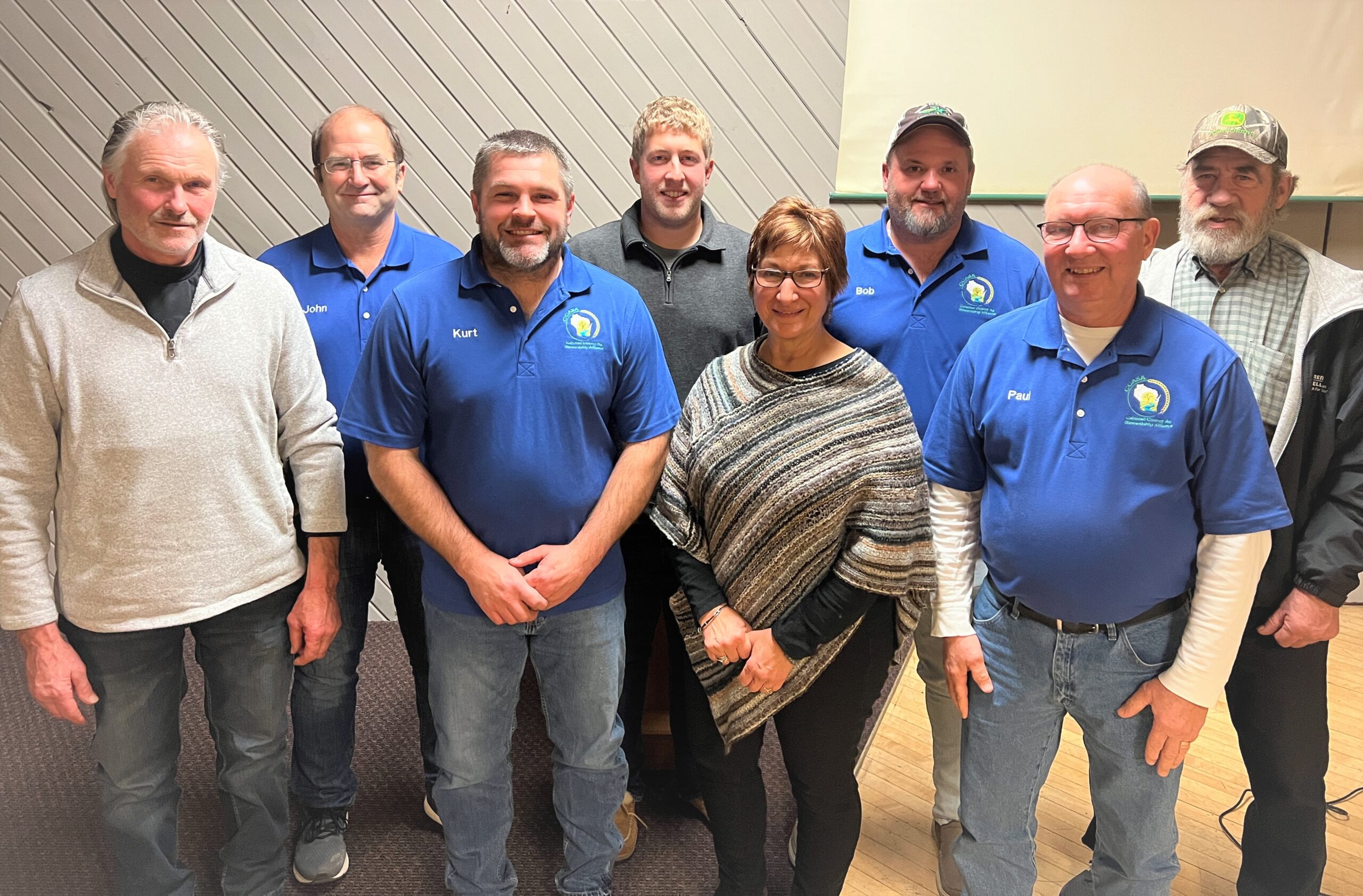
As CCASA continues to grow its membership, it also expanded the board of directors at this year’s meeting. CCASA elected a full board, including John Schwarz, president; Kurt Schneider, vice president; John VandenBoom, treasurer; Barbara Fett, secretary; Paul Meyers; Ken Rach; Bob Danes; Jim Casper and Dave Geiser.
For more information on events in 2023, follow CCASA on Facebook at facebook.com/CalumetCountyAgStewardshipAlliance or check out their new website www.calumetcounty.org/CCASA
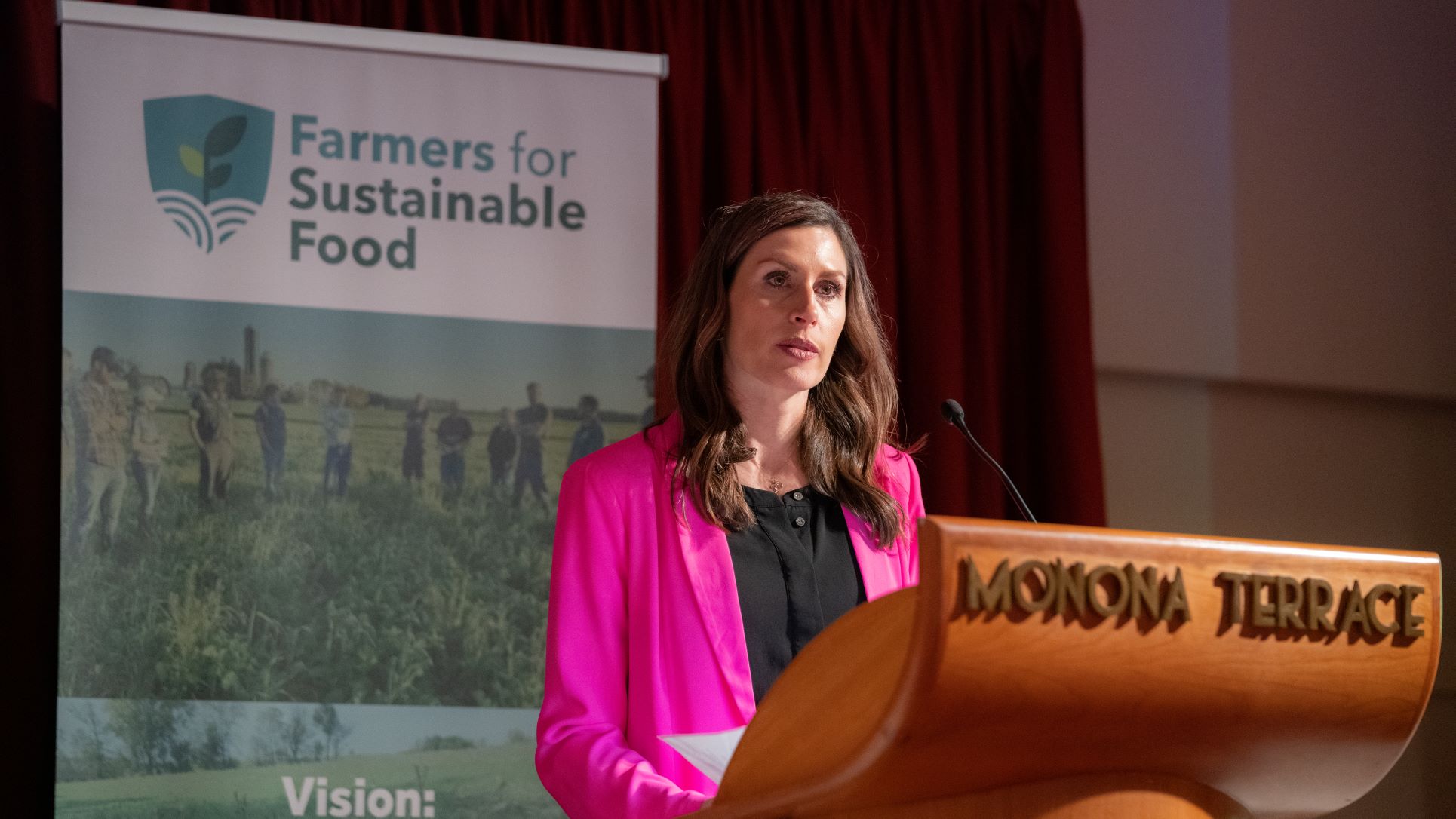
Farmers for Sustainable Food shares how farmers are being climate smart at annual meeting
Riding a wave of momentum entering 2023, Farmers for Sustainable Food stands poised to expand their efforts in farmer-led sustainability projects, according to leadership. Members, leaders and industry partners gathered for FSF’s 2022 annual meeting on Jan. 19 at the Dairy Strong conference.
Word is spreading about the nonprofit’s work. FSF membership has grown to 51, including 11 newcomers in 2022. By partnering with seven farmer-led conservation groups across Wisconsin, FSF now works with 300 farmers representing 260,428 acres and 165,987 head of livestock.
 FSF continues to show growth not only through farmers and acres but also with projects, including expanding into the animal care space, and conservation practices implemented throughout the Upper Midwest.
Managing Director Lauren Brey gave an overview of plans for continued growth, enhanced through a $50 million USDA Partnerships for Climate-Smart Commodities grant FSF received with its sister organization Edge Dairy Farmer Cooperative.
“We’ve outlined three different avenues for these climate-smart projects, including farmer-led groups and working with dairy and beet sugar processors to spearhead projects with farmers in their supply chains,” Brey said. “Our approach is really trying to be flexible and not prescribing practices or prescribing a way of doing a sustainability project, but rather just getting farmers to be proactive.”
A representative from each farmer-led conservation group supported by FSF shared highlights of local activities. The groups: Calumet County Ag Stewardship Alliance, Dodge County Farmers Healthy Soil Healthy Water, Lafayette Ag Stewardship Alliance (LASA), Peninsula Pride Farms (PPF), Sheboygan River Progressive Farmers, Western Wisconsin Conservation Council (WWCC) and Yahara Pride Farms (YPF).
“We aren’t just talking about making a positive impact in our watershed; we are doing it,” Jeff Endres, YPF president, said.
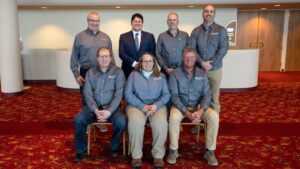
Front L-R: Jeff Endres, Lynn Thornton, Todd Doornink. (not pictured: Holly Bellmund and Colleen Geurts)
Members of FSF re-elected three directors to its board —Paul Cornette of PPF, Lee Kinnard of Kinnard Farms and Greg Steele of Compeer Financial. Steele was elected treasurer and Cornette will remain vice president.
Other board members include Todd Doornink representing WWCC, the president; Holly Bellmund of GLC Minerals will remain secretary; Colleen Geurts; Jeff Endres of YPF; Lynn Thornton of Grande Cheese and Mike Berget of LASA.
Farmer-led groups’ 2023 annual meetings
| |||||||||||||||||||||||||||||||||||||||||||||||||||||||||||||||||||||||||||||||||





DATCP Awards $1 Million in Producer-Led Watershed Protection Grants to 43 Groups
MADISON, Wis. – The Wisconsin Department of Agriculture, Trade and Consumer Protection (DATCP) has awarded $1 million in producer-led watershed protection grants (PLWPG) to 43 farmerled groups for 2023. Grants support producer-led conservation solutions by encouraging innovation and farmer participation in on-the-ground efforts to improve Wisconsin’s soil health and water quality.
“With 14.3 million acres dedicated to agriculture in Wisconsin, our farmers are some of the most ardent supporters of protecting our land and water because they know firsthand the value of clean water and fruitful land for the success of their businesses,” said Gov. Evers. “These grants provide the support needed for farmers to stay innovative and lead the way on improving water quality across our state while protecting their bottom lines, helping us build a healthier, more sustainable Wisconsin for everyone.”
“This grant program has provided an innovative and successful model to encourage conservation efforts in our state,” said DATCP Secretary Randy Romanski. “With the additional funding provided by Gov. Evers and the state legislature for these grants, additional farmers are able to encourage their neighbors to engage in conservation efforts through educational activities, on-farm research and demonstration, and incentives that help minimize financial risk.”
This is the eighth round of grant awards since funding was first made available in the 2015-17 state budget. Annual interest in DATCP’s PLWPG program continues to exceed the program budget. This funding cycle received the highest amount of requests in the history of the program, with 45 applicants for a total funding request of over $1.5 million.
“The producer-led watershed program has brought farmers together who are willing to learn and demonstrate that improving soil health leads to cleaner water and less inputs, which can lead to higher profits per acre,” said Matt Winker, owner of Redline Dairy and member of Milwaukee River Watershed Clean Farm Families.
A map of recipients can be found on DATCP’s website. The recipients and award amounts include:
- Bad-Axe Farmer-Led Watershed Council – $20,000
- Biological Farming Friends – $21,166
- Buffalo Trempealeau Farmer Network – $30,800
- Calumet County Ag Stewardship Alliance – $18,300
- Cedar Creek Farmers – $4,500
- Central Wisconsin Farmers’ Collaborative – $20,000
- *Chippewa Valley Producer Led Watershed – $10,000
- Coon Creek Community Watershed Council – $30,800
- Dodge County Farmers for Healthy Soil & Healthy Water – $37,960
- Dry Run Farmer-Led Watershed Council – $10,000
- Eau Pleine Partnership for Integrated Conservation – $37,960
- Farmers for Lake Country – $17,000
- Farmers for the Upper Sugar River – $30,800
- Farmers for Tomorrow River Watershed Council – $24,400
- Farmers of Mill Creek Watershed Council – $30,800
- Farmers of the Barron County Watersheds – $19,775
- Farmers of the Lemonweir Valley – $30,800
- Farmers of the Roche-A-Cri – $14,600
- Farmers of the Sugar River – $23,960
- Farmers on the Rock – $30,800
- FARMERS4HEALTH / Bear Creek Chippewa River – $17,250
- *Flambeau Valley Watershed Group – $10,000
- *Green County Clean Waters – $21,606
- Hay River Farmer-Led Watershed Council – $20,000
- Horse Creek Area Farmer Led Watershed Council – $10,000
- Iowa County Uplands Watershed Group – $24,396
- Jefferson County Soil Builders – $30,800
- *Kenosha County Regenerative Producers – $10,000
- Lafayette Ag Stewardship Alliance – $30,800
- Lake Wisconsin Farmer Watershed Council – $30,800
- Milwaukee River Watershed Clean Farm Families – $37,960
- Peninsula Pride Farms – $37,960
- Producers of Lake Redstone – $24,400
- Red Cedar Conservation Farmers – $24,400
- Rock River Regenerative Graziers – $30,757
- Sauk Soil & Water Improvement Group – $25,000
- Sheboygan River Progressive Farmers – $30,800
- Shell Lake, Yellow River Watershed Council – $13,200
- South Kinni Farmer Led Watershed Council – $10,250
- Tainter Creek Farmer-led Watershed Council – $24,400
- Watershed Protection Committee of Racine County – $30,800
- Western Wisconsin Conservation Council – $20,000
- Yahara Pride Farms, Inc. – $20,000
Note: New groups marked with an asterisk *.
About the Producer-Led Watershed Protection Grants
In 2021, groups in the program provided conservation practices on 978,881 acres, an increase from 798,221 acres in 2020. These farmer-led conservation efforts prevented 219,638 pounds of phosphorus and 342,163 tons of soil from leaving farm fields.
Including this recent round of funding, DATCP has awarded more than $5.2 million to 45 different groups across the state since the program started in 2015. Grant projects have focused on providing conservation education to farmers, conducting on-farm demonstrations and research, issuing incentive payments for implementing conservation practices, organizing field days, and gathering data on soil health and water quality.
Producer-led groups must work with a county land conservation department, University of Wisconsin-Division of Extension, non-profit conservation organization, or the Wisconsin Department of Natural Resources. Funds cannot pay for real estate, loans, equipment, or lobbying, and the program places caps on the amount of funding that can be used for staff support to the groups. Each group must start with at least five farmers in the watershed.
For more information on producer-led watershed protection grants, visit DATCP’s website.
###
Find more DATCP news in our newsroom, on Facebook, Twitter, and Instagram.
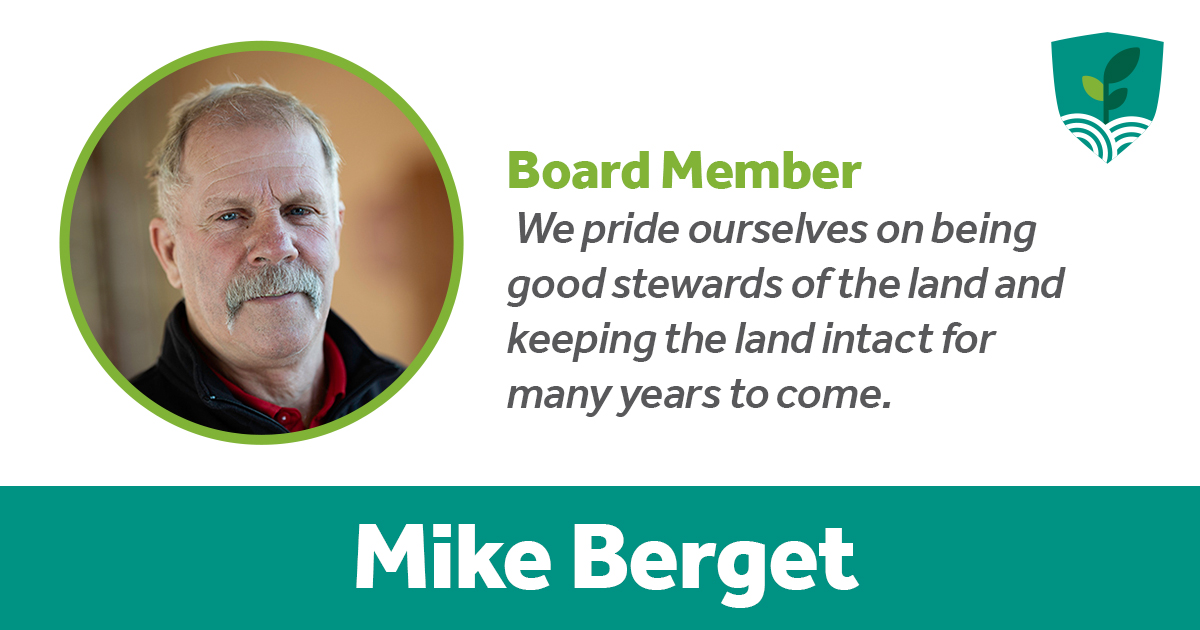
Mike Berget
1. Background: what you do/how you got involved with sustainability?
Mike Berget owns Berget Family Farms which consist of Matt Berget and Meghan Saunders and their families. They farm 8,600 acres of corn annually, along with 2,200 acres of soybeans and 300 acres of wheat. We pride ourselves on being good stewards of the land and keeping the land intact for many years to come. His father always used minimum tillage, so he grew up using conservation practices. Mike is a founding member of the Lafayette Ag Stewardship Alliance (LASA) group in southwestern Wisconsin.
2. Why be a part of Farmers for Sustainable Food?
LASA had the support from FSF to start its farmer-led conservation group and Mike has always felt it’s important to be involved with sustainable solutions. By being involved with FSF he is able to learn from other groups and the network of resources FSF brings.
3. Why should others join Farmers for Sustainable Food?
FSF is a well-run organization that shares a lot of the same goals our LASA group has for the future. They bring opportunities to do good and do a nice job of representing the farmers. It’s well worth our time to be involved in FSF as they help us share our sustainability story with a larger audience than a farmer can reach on his or her own.