Farmer-led conservation alliance proves even small groups can make big impact
Background: how did you got involved with sustainability?
I have a background in environmental engineering and came into the minerals and mining industry over twenty years ago working on compliance. Over time, businesses have evolved into the understanding that compliance is a must do to stay in business right now, but sustainability is what lets your business stay relevant in the future. About seven years ago, I worked for a public company and I was responsible for the new sustainability program and I learned about triple bottom thinking – doing right by the shareholders and employees, the customers and other community stakeholders at the same time is a winning solution. While compliance is like policing, sustainability is strategic and, when done correctly, is tied to enterprise growth. Sustainable practices are where it’s at as people, agriculture and industry compete for the same natural resources.
Why did you want to be a part of FSF and serve on the board?
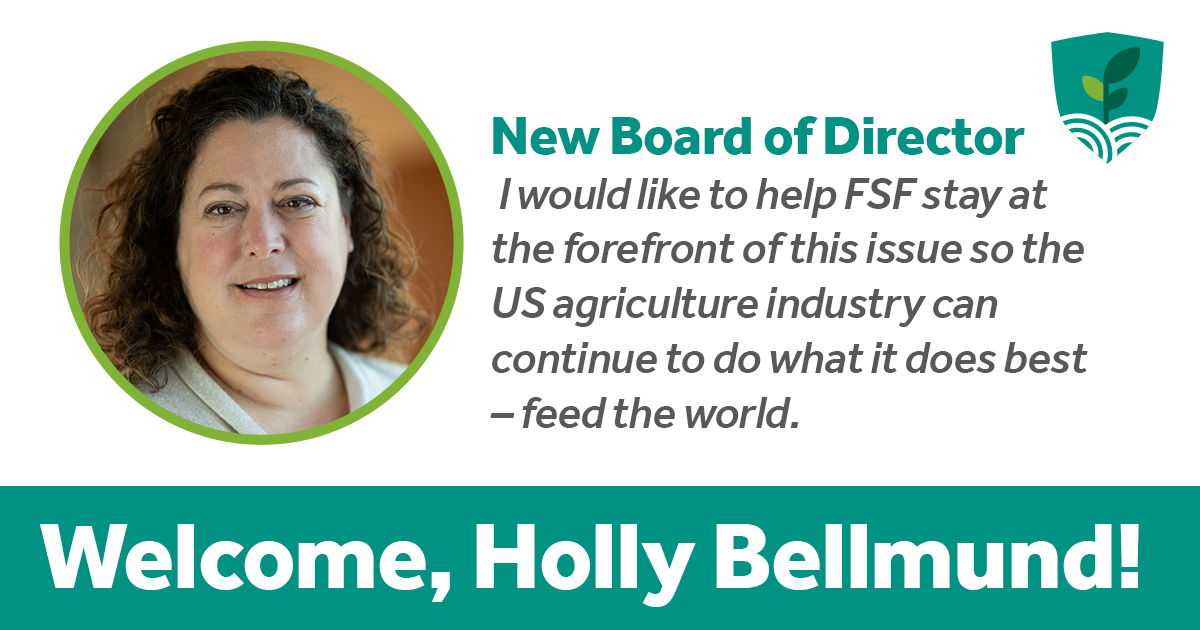
I wanted to serve on the FSF Board because the need to connect consumers to farmers and farmers to consumers is immediate. Consumers want to make food choices that are sustainable, but they have limited information on how to guide their purchase power. Instead, the farmers are often seen as bad guys. That could not be further from the truth – farmers sole purpose is to feed people. That was once a well-understood message that has somehow gotten lost. I would like to help FSF stay at the forefront of this issue so the US agriculture industry can continue to do what it does best – feed the world.
Why should others join FSF?
If you want to be part of the conversation about how and why farmers are using both stakeholder feedback, technology and economics to drive sustainability practices and meet with people from throughout agriculture who have the same interest and want to be part of the solution, FSF is the group for you.
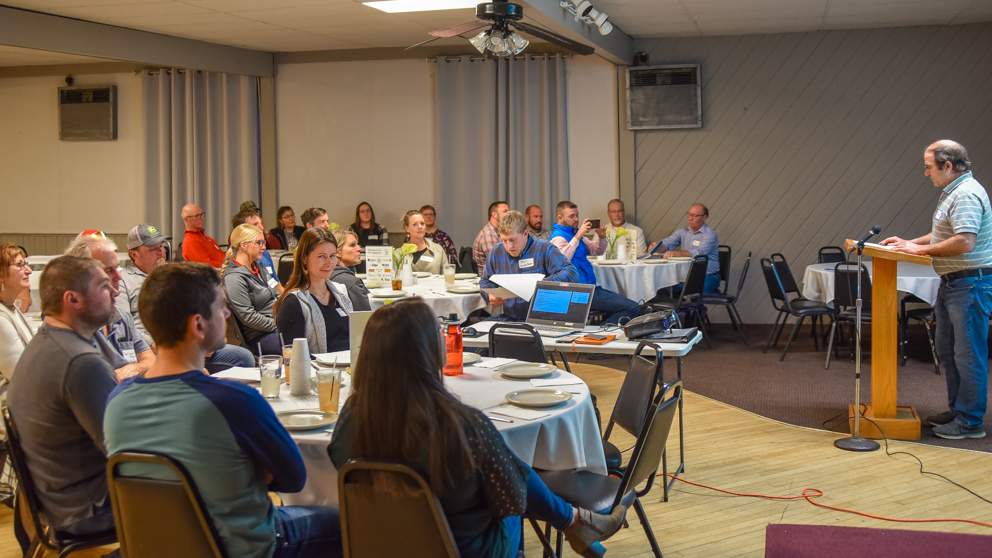
Members of Farmers for Sustainable Food (FSF) say the group continues to pick up momentum heading into 2022. Members, leaders and industry partners met for a first annual meeting Jan. 20 at the Dairy Strong conference.
FSF membership has grown to 40, including 14 newcomers in 2021. By partnering with six farmer-led conservation groups across Wisconsin, FSF now works with 231 farmers who represent 288,925 acres and 243,720 head of livestock.
Last spring, FSF and three partners gained national recognition for a sustainability project they piloted in southwestern Wisconsin. The partners were Grande Cheese, The Nature Conservancy and Layafette Ag Stewardship Alliance (LASA). Since then, FSF has added three sustainability projects with other supply chain partners and farmer groups.
“Holding our first annual meeting allowed us the great opportunity to connect with our members, reflect on the progress we have made and establish goals for where we want to grow,” Lauren Brey, FSF managing director, said. “Our collective effort and outcomes have grown tremendously in a short period, and we are poised for even greater accomplishments in the coming year. It wouldn’t be possible without the belief of our members and the farmers doing the hard work.”
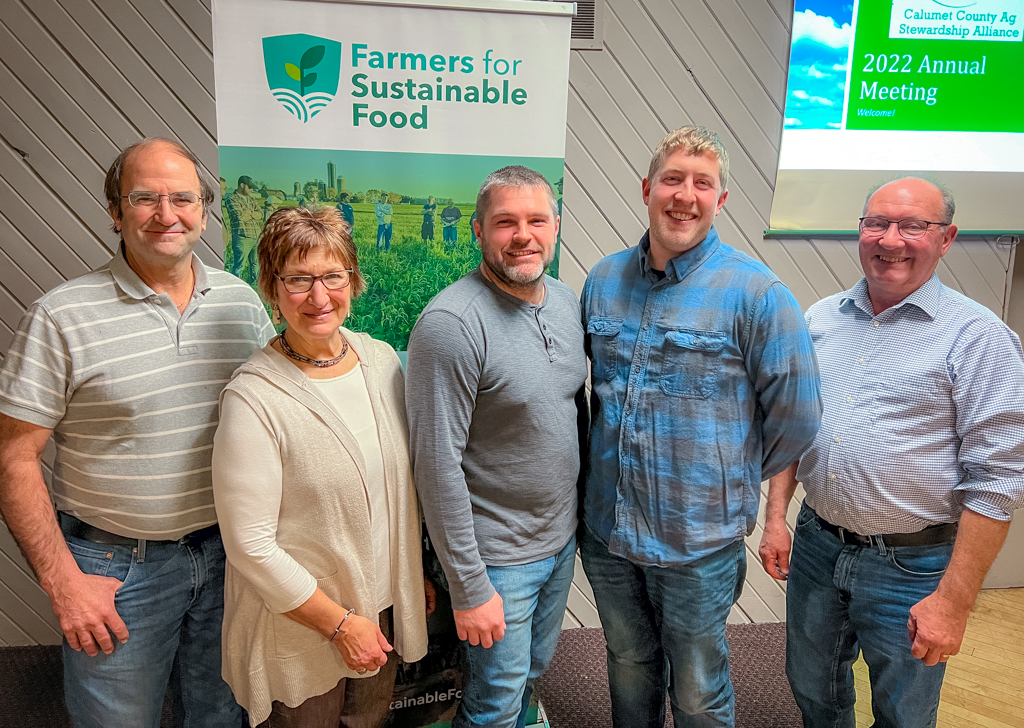
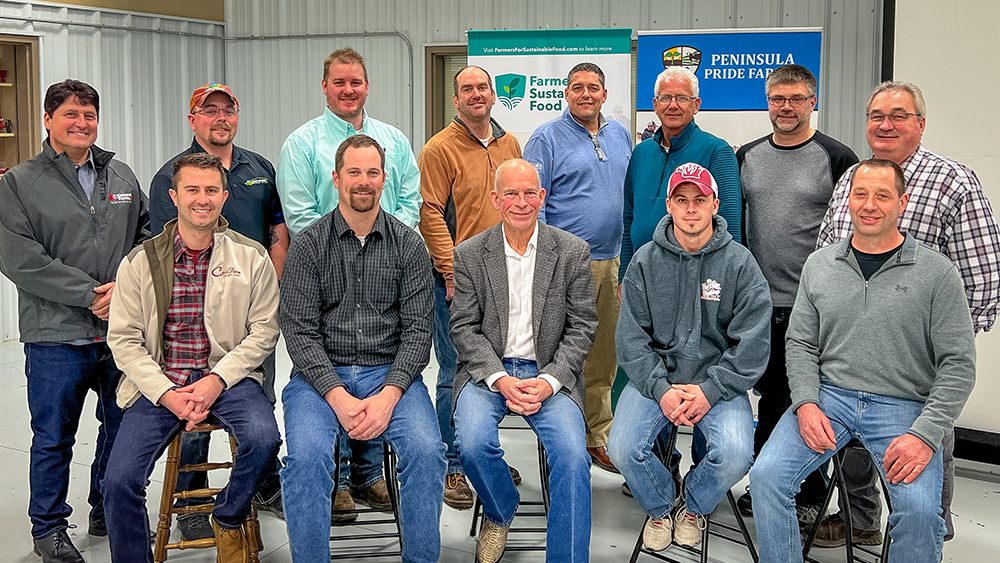
A representative from each farmer group supported by FSF shared highlights of local activities. The groups: Calumet County Ag Stewardship Alliance (CCASA), LASA, Peninsula Pride Farms (PPF), Sheboygan River Progressive Farmers, Western Wisconsin Conservation Council (WWCC) and Yahara Pride Farms (YPF).
“How do we get farmers talking to farmers, that’s what we’re focusing on,” Todd Doornink, WWCC president, said.
PPF President Don Niles said the farming community has the greatest responsibility but also the greatest opportunity to improve the environment.
“There’s help and encouragement out there,” he said. “ We just have to bring the energy.”
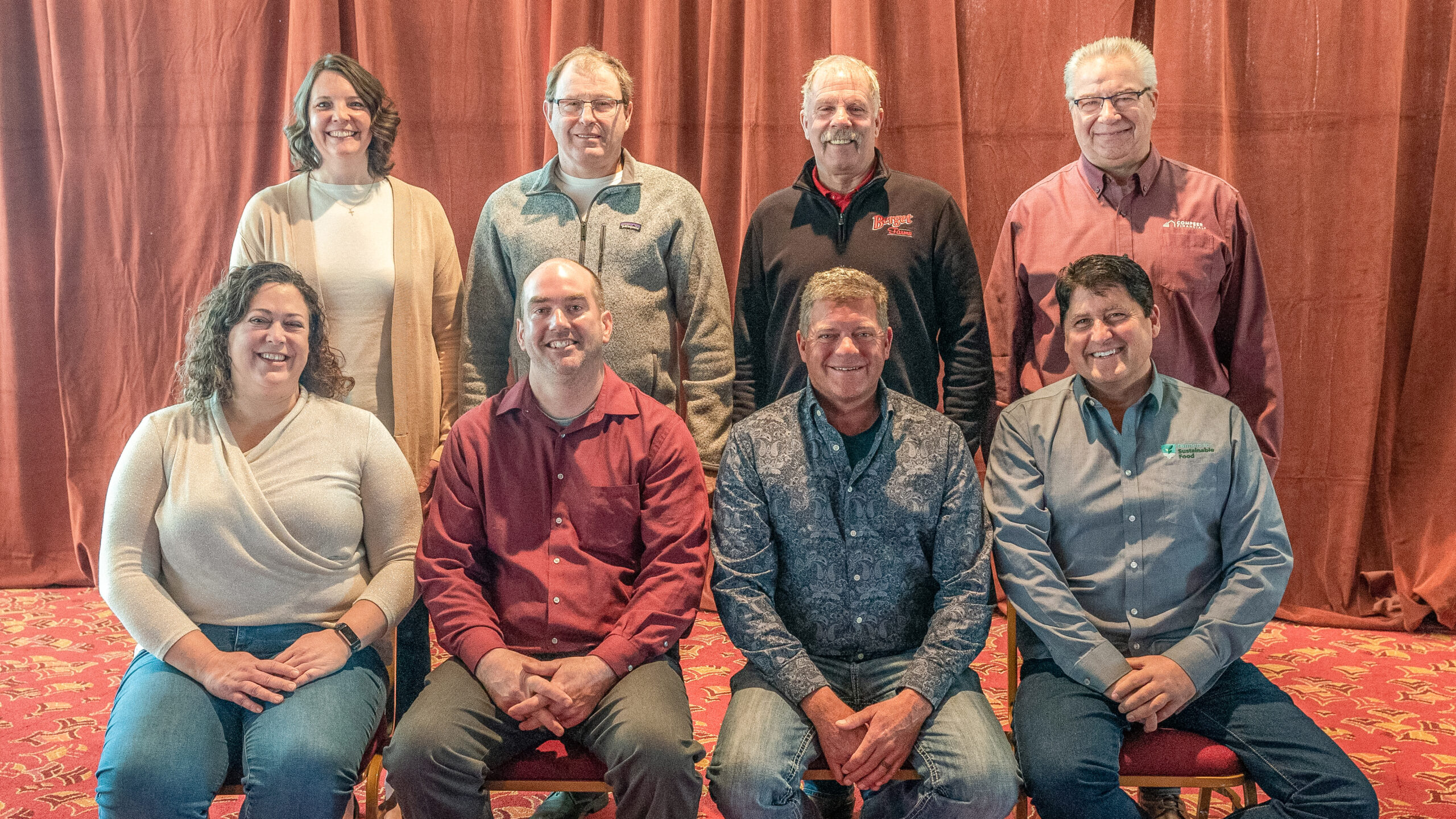
Members of FSF re-elected two directors and elected two new directors to its board. Todd Doornink of Jon-De Farm and Lynn Thornton of Grande were re-elected. Holly Bellmund of GLC Minerals and Jeff Endres, president of YPF, were elected to the board. Bellmund was elected secretary, and Doornink will remain president.
Other board members include Paul Cornette of Cornette Dairy, vice president; Lee Kinnard of Kinnard Farms, treasurer; Colleen Geurts of Schreiber Foods; Greg Steele of Compeer Financial; and Mike Berget of Berget Family Farms.
Wes Garner of GLC Minerals, who served on the FSF board since inception, retired.
“I never imagined when we kicked this thing off three years ago that we would be where we are today,” Garner said.
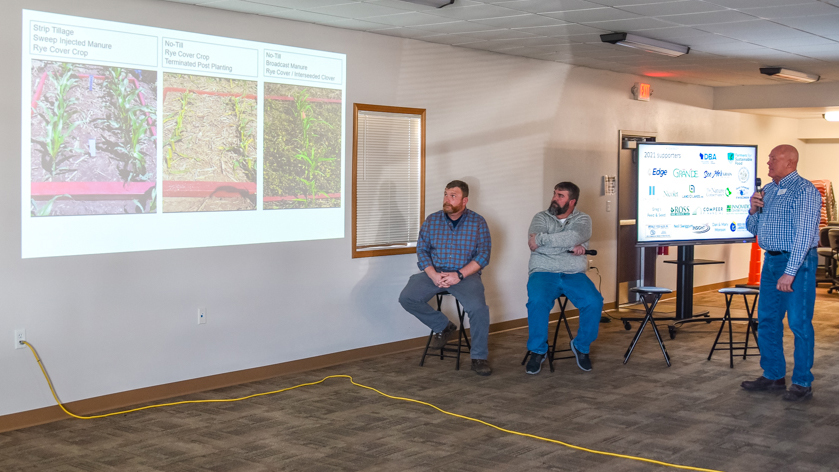
The group offered an opportunity for members to participate in a roundtable discussion about the future of sustainability projects.
“The work that FSF is doing is really about the legacy of agriculture, how do we want to leave it for generations to come,” Tim Trotter, CEO of the group, said. “We truly appreciate all of you as members… You all understand that we are all in this together.”
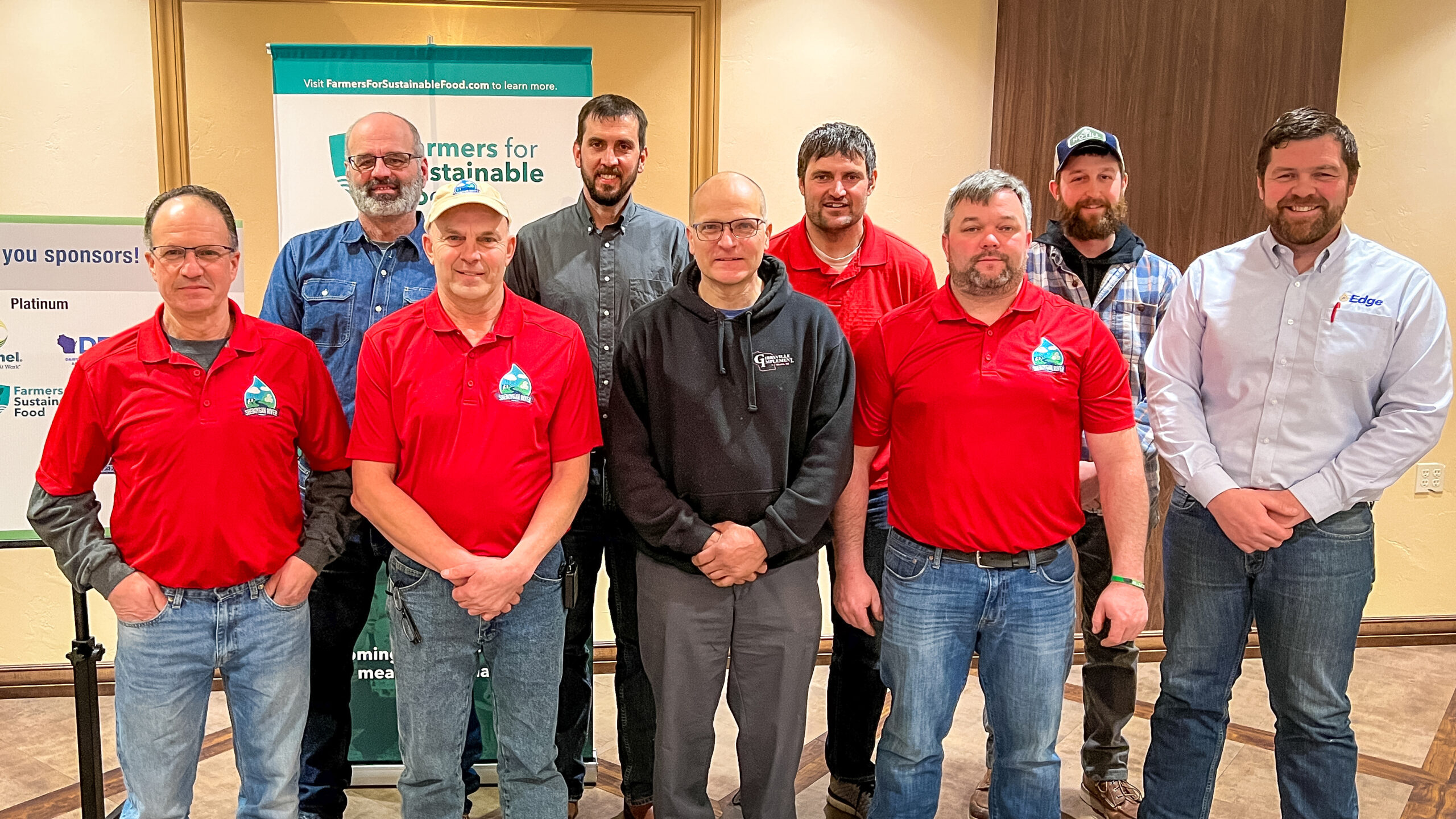
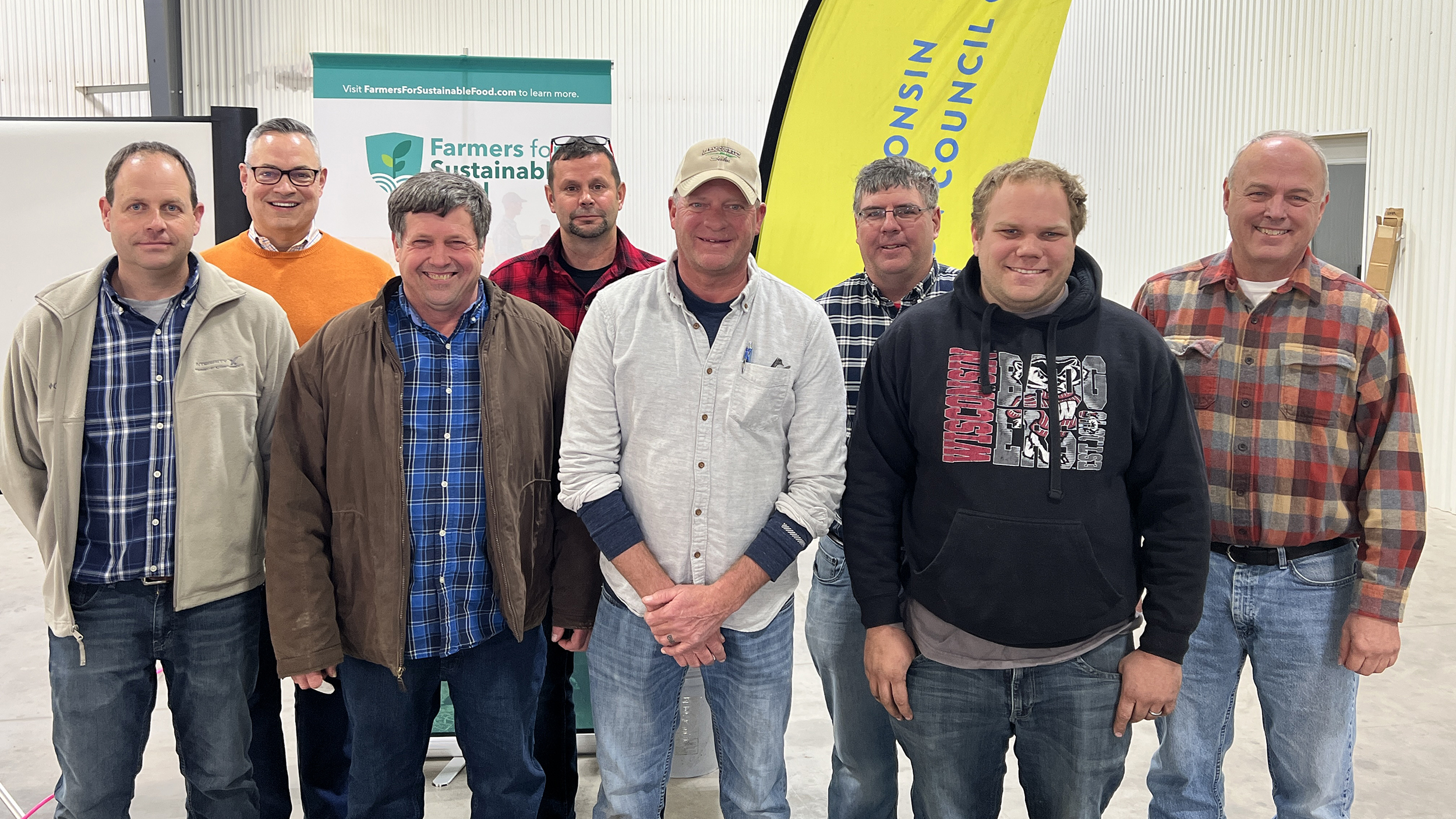
Board Picture caption: Back L-R: Colleen Geurts, Jeff Endres, Mike Berget, Greg Steele. Front L-R: Holly Bellmund, Paul Cornette, Todd Doornink, Lee Kinnard. (not pictured: Lynn Thornton)
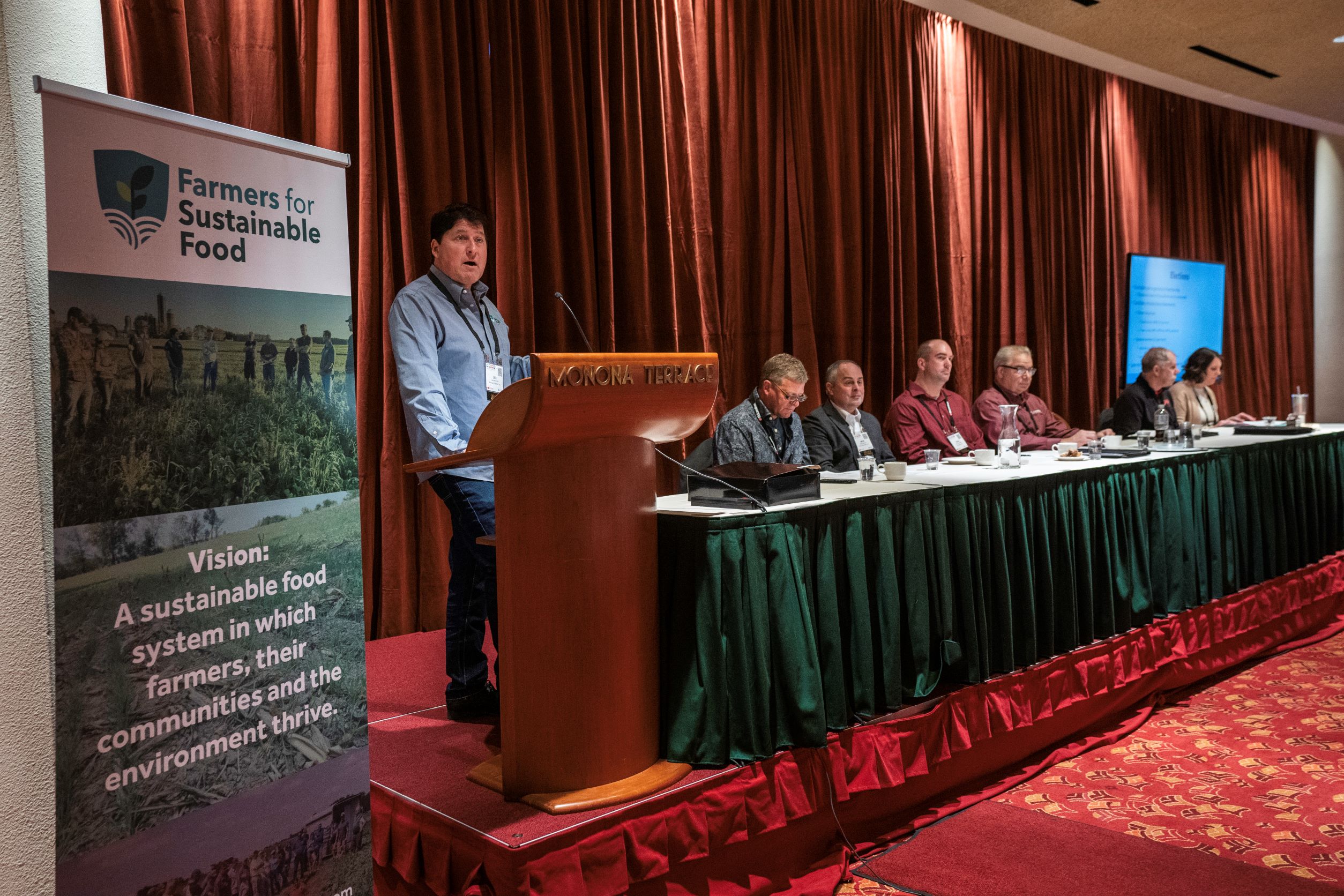
Farmers for Sustainable Food Annual Meeting
7-8 a.m. Thursday, January 20, 2022
Monona Terrace, Madison, WI
FSF members are invited to listen to the year in review from President Todd Doornink and Managing Director Lauren Brey.
Each farmer-led conservation group president will also give updates on membership, growth and future goals.
Following the members meeting we will have a farmer-led sustainability project roundtable discussion.
If you’re interested in attending please RSVP to Lauren Brey lbrey@farmersforsustainablefood.com
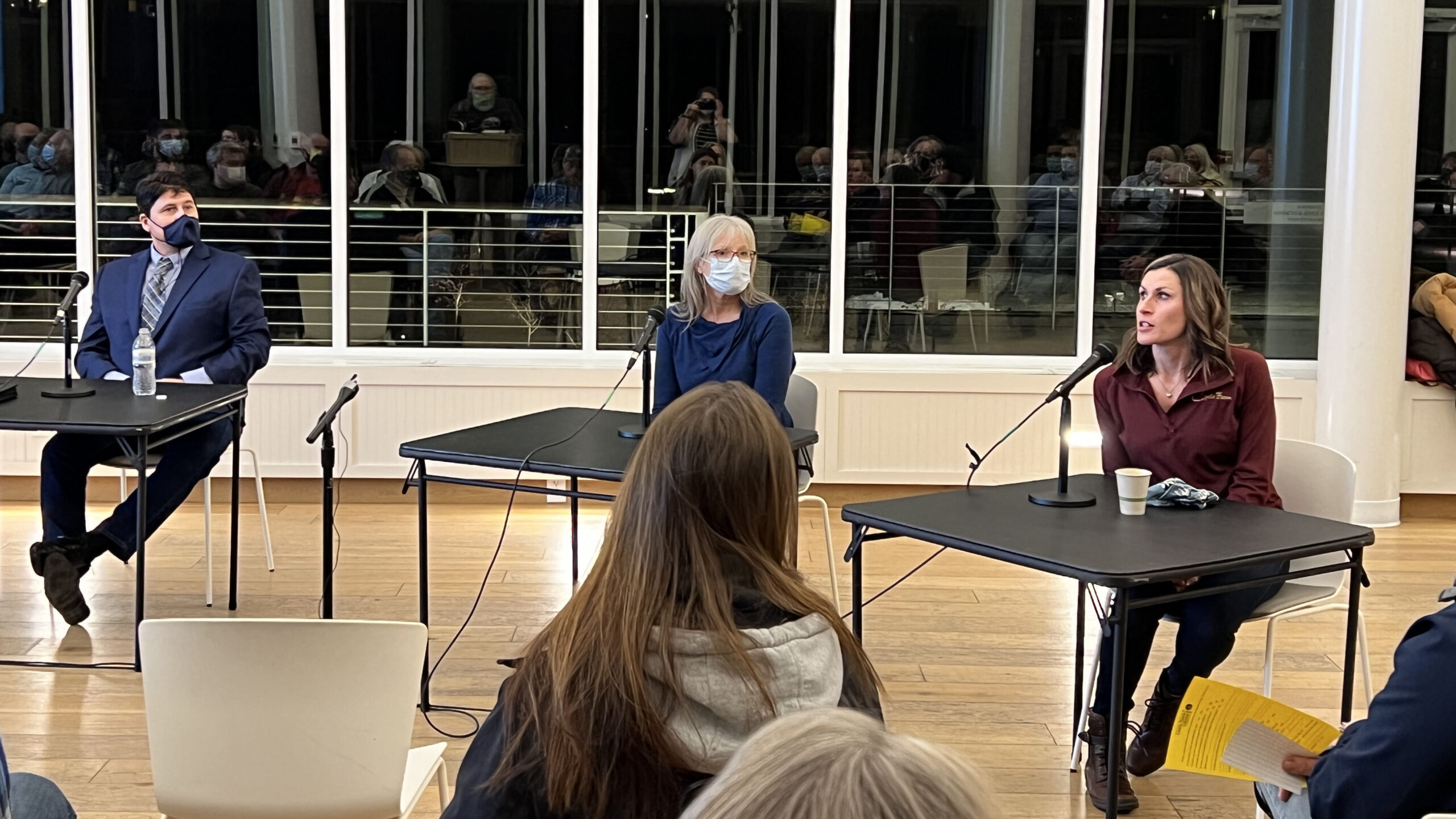
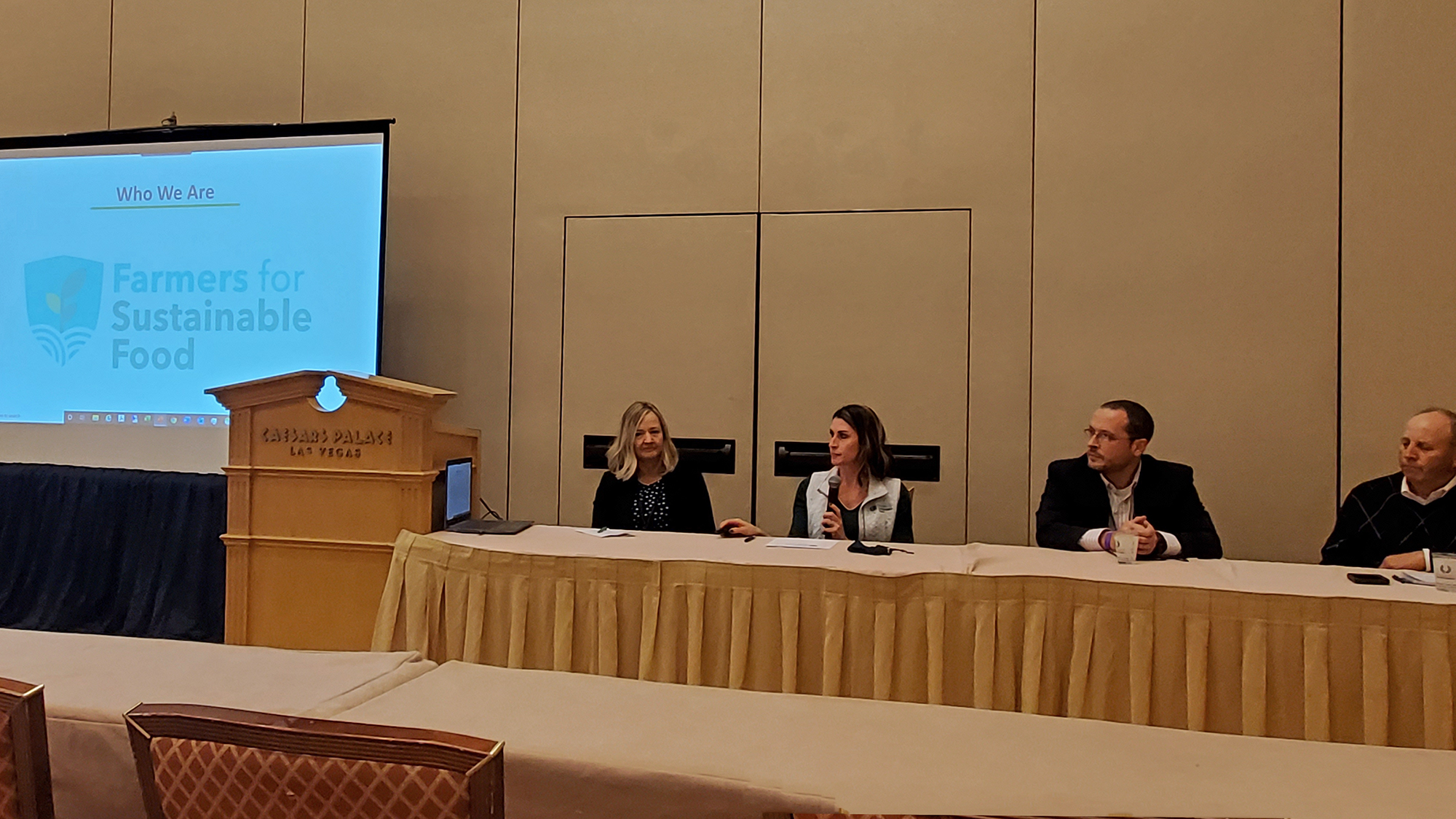
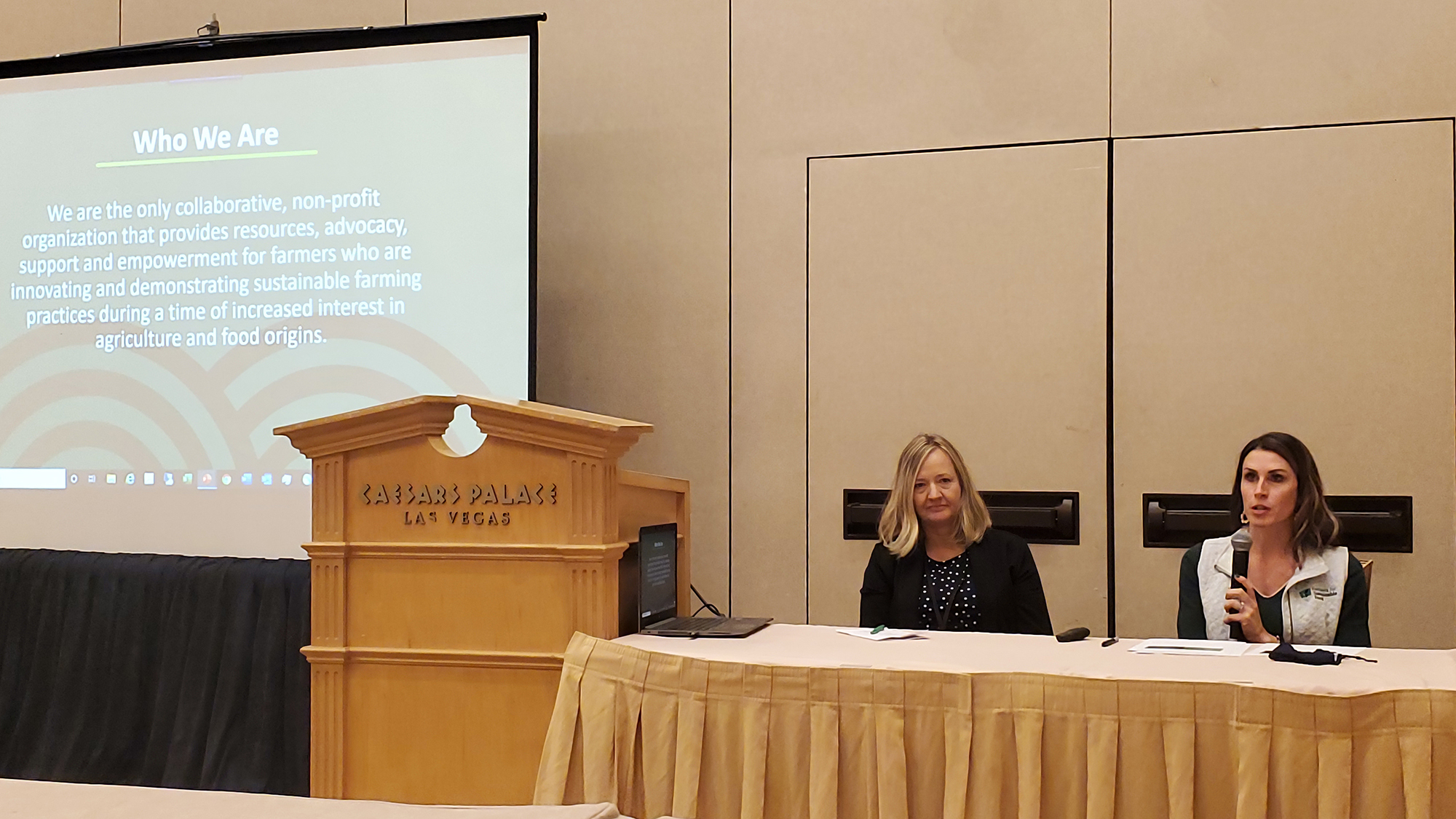
Lauren Brey, managing director of Farmers for Sustainable Food, participated in a panel at the Sustainable Ag Summit held in Las Vegas on Nov. 17, 2021. One of three panelists, Brey was accompanied by Drew Kessler, Houston Engineering, and Steve Shlangen, Schlangen Family Farm. Kelly Murray Young, Field to Market, moderated.
The panel discussed four key areas of establishing and implementing projects to document the financial and environmental benefits of on-farm conservation: engagement, formation, operation, and conclusion.
Brey presented how Farmers for Sustainable Food has developed the Framework for Farm-level Sustainability Projects, an easy-to-use handbook that helps farmers determine which conservation practices are most effective for their individual farms by equipping them with the tools necessary to document the environmental and financial effects of conservation practices.
In 2019, this framework was put to the test through a pilot project in southwest Wisconsin.
Through the pilot project, farmers completed financial and environmental analyses to develop benchmarks, financial baselines were set to evaluate ROI year-over-year and farmers determined what conservation practices worked best for their farm. Brey shared the year-one results with attendees. This project is now being duplicated by other farmer-led groups and food companies.
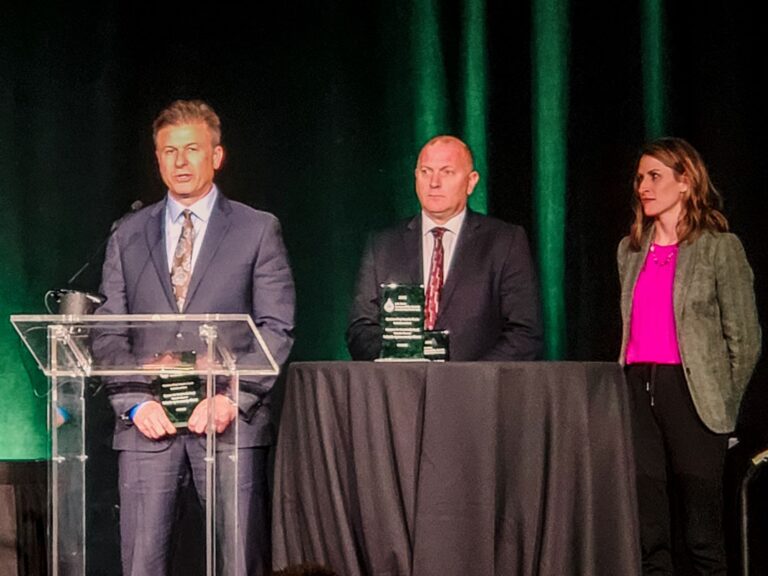
Farmers for Sustainable Food was honored when their pilot project received the “Outstanding Supply Chain Collaboration” award from the Innovation Center for U.S. Dairy in 2021.
“Participating in a breakout session at the Sustainable Ag Summit was a great opportunity to share the work that we are doing at FSF with a broad audience. There were farmers, environmental organizations, food-supply companies and retailers in the audience who were all interested in learning about the work we are doing,” Brey said. “We made some valuable connections and I’m looking forward to seeing where these networks take us to help advance our efforts.”